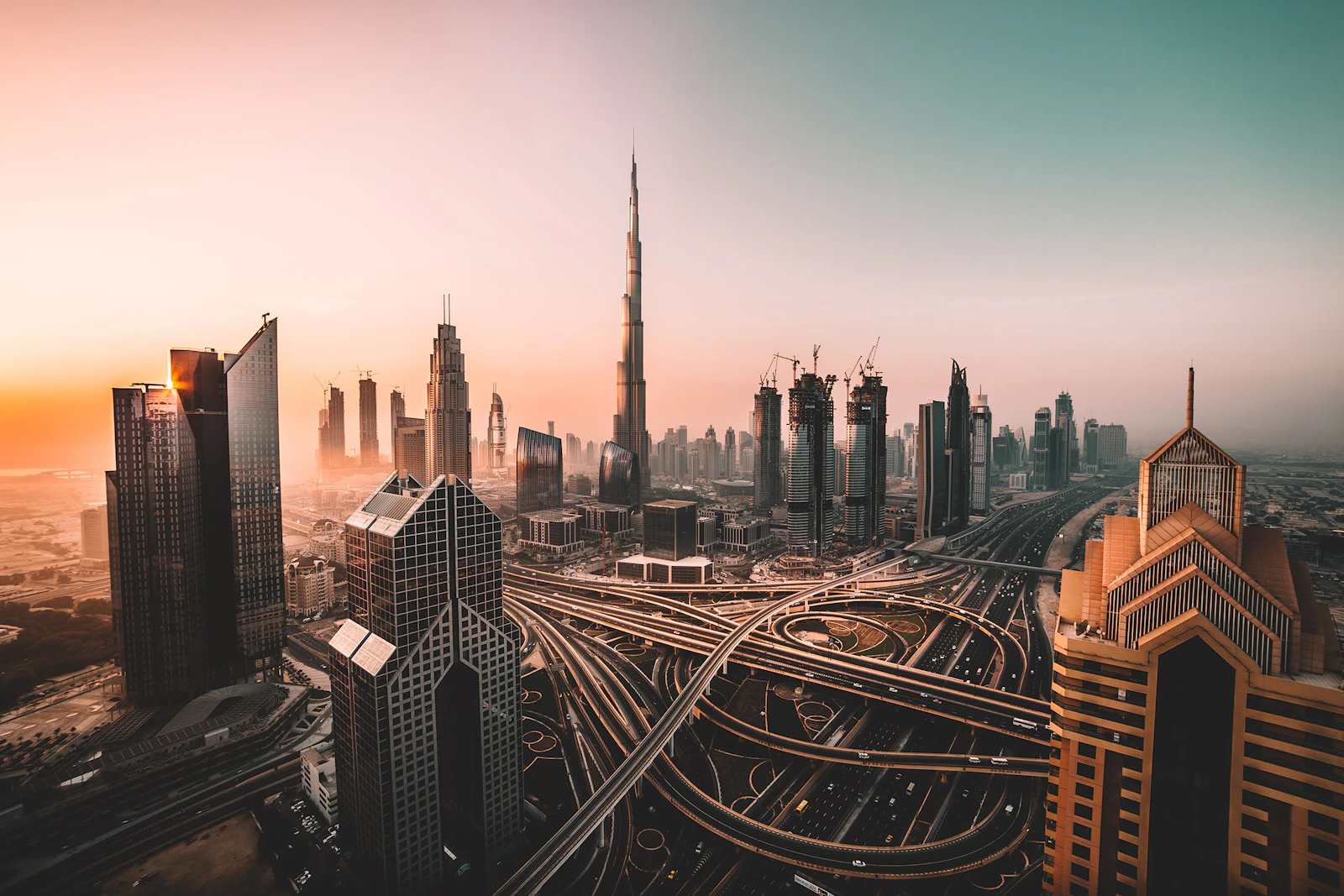
The first half of 2026 delivered an extraordinary performance for Dubai's residential property market, with the luxury villa segment once again leading the charge. By the numbers, H1 2026 saw approximately 88,000 residential transactions valued at over AED 280 billion — a record first half that surpassed even the exceptional H1 2025 by a significant margin. For luxury villa buyers, the story is one of sustained price appreciation in prime communities, an increasingly sophisticated mortgage financing landscape, and a market that continues to demonstrate structural resilience despite global macroeconomic headwinds. This comprehensive Dubai villa market H1 2026 review breaks down the numbers by segment, community, and buyer profile, then provides our data-driven outlook for the remainder of the year.
H1 2026 Transaction Volumes: The Numbers Behind the Record
Dubai's residential property market recorded an estimated 88,000-92,000 transactions in the first half of 2026, depending on the final DLD reconciliation for June. Q1 2026 alone accounted for 44,743 transactions worth AED 143.1 billion, with 2,148 deals above AED 10 million in a single quarter. Q2 2026 maintained momentum with an estimated 43,000-47,000 transactions, supported by the April recovery surge and steady May-June activity. The luxury villa segment — properties above AED 10 million — accounted for approximately 4,000-4,200 transactions in H1 2026, nearly double the pre-pandemic H1 2019 baseline of 2,100. This is not a cyclical spike; it represents a structural shift in Dubai's position as a global wealth management hub.
Monthly Breakdown: January to June 2026
January 2026 opened the year with approximately 14,200 transactions, driven by strong international buyer demand and the launch of multiple high-profile off-plan projects. February saw a brief geopolitical disruption, with volumes dipping to approximately 11,500 transactions, but the market rebounded decisively in March, which recorded approximately 15,300 transactions — the strongest March on record. April posted 13,799 transactions with a 9% month-on-month value increase, marking the start of the recovery that carried into May (7,800-8,200 transactions, a seasonal normalisation) and June (estimated 8,500-9,000 transactions, supported by improving buyer confidence and competitive mortgage rates). The pattern is clear: Dubai's market absorbed a geopolitical shock in Q1 and emerged stronger, with each subsequent month confirming the depth of underlying demand.
Price Trends: Which Communities Outperformed in H1 2026?
Prime villa prices in Dubai recorded 15-20% year-on-year growth through H1 2026, according to Knight Frank's Global Luxury Index, which placed Dubai second worldwide for prime residential price appreciation at +25.1% year-on-year in Q1 alone. The pace moderated in Q2 as the market normalised following an extraordinary Q1, but prices in the most sought-after communities remained firmly in growth territory.
Community-Level Performance
Palm Jumeirah villa prices held firm in the AED 4,200-4,800 per square foot range throughout H1, with the landmark AED 340 million+ Jumeirah Bay Island sale setting a new benchmark for the ultra-luxury segment. Emirates Hills showed zero net price movement in May for the first time in 18 months, but prices remained at AED 5,000-6,000+ per square foot, reflecting the community's status as Dubai's most prestigious villa address. Dubai Hills Estate saw a modest 1-2% pullback from Q1 peaks in May, but prices recovered through June, ending H1 approximately 18% higher year-on-year. The Oasis emerged as the highest-volume luxury community, led by master-planned villa launches that appealed to family buyers seeking lifestyle and space. Palm Jebel Ali and Naia Island gained traction among international buyers drawn to newer waterfront communities with significant capital appreciation potential.
“What we saw in H1 2026 was not a speculative boom but a fundamental repricing of Dubai's luxury villa stock. The buyers are genuine — they are moving families, moving businesses, and committing to Dubai as a primary residence. That kind of demand does not disappear when interest rates move 25 basis points.”
Mortgage Market: H1 2026 Financing Trends and the EIBOR Story
The mortgage market in H1 2026 was characterised by three defining trends: competitive rate compression, a surge in mortgage-backed luxury transactions, and the expansion of off-plan financing options. Three-month EIBOR traded in a 3.65-3.70% range from April through June, providing a stable base for lenders to offer aggressive fixed-rate products. The best headline rates — 3.25% Islamic (NBF) and 3.70% conventional (HSBC) — were the lowest since early 2024 and drove a significant increase in financed purchases at the luxury level.
The April 2026 mortgage transaction figure of AED 9 billion, reported by ZAWYA, was particularly significant because it confirmed that financed purchases — not just cash deals — were driving the luxury market. For context, cash transactions still dominate the prime segment (86% per Knight Frank), but the growing share of mortgage-backed luxury purchases signals that banks are actively lending at the AED 10 million+ level, and that buyers are deploying leverage confidently. The launch of Mashreq's Off-Plan Home Loan in June and Emirates NBD's Dubai Holding partnership further expanded financing options for off-plan villa buyers, who previously had to fund construction-period payments from equity.
Foreign Buyer Demand: Who Bought in H1 2026?
International investor demand was a cornerstone of H1 2026's record performance. Foreign transaction value rose nearly 26% year-on-year in Q1, with 48,445 foreign deals recorded. UK buyers remained the most active international purchaser group, drawn by Dubai's favourable tax environment, lifestyle proposition, and relative value compared to London's prime market. Chinese investors returned in force, driven by capital controls liberalisation and a renewed appetite for overseas property. European high-net-worth individuals — particularly from Germany, France, and Switzerland — increased their Dubai villa acquisitions, attracted by the city's political stability and expanding wealth management ecosystem. Buyers from India, Russia, and the broader Middle East region continued to account for a significant share of luxury villa transactions, particularly in the AED 10-30 million range.
H1 2026 Supply Dynamics: Constrained at the Top
The supply story in H1 2026 is a tale of two markets. The broader Dubai residential market faces a significant delivery pipeline of 366,000 units projected by 2028, concentrated in the mid-market apartment segment. But the luxury villa market — properties in Palm Jumeirah, Emirates Hills, Jumeirah Bay Island, Dubai Hills Estate, and The Oasis — operates under fundamentally different supply dynamics. New villa supply in these communities is structurally limited: there are no undeveloped plots on Palm Jumeirah; Emirates Hills has fewer than 10 vacant plots remaining; and Dubai Hills Estate's villa phases are selling out within weeks of launch. The Oasis and Palm Jebel Ali represent the primary new supply sources, but even these are constrained by developer phasing and construction timelines. This supply-demand imbalance is the single most important factor supporting current price levels and the outlook for continued appreciation.
H2 2026 Outlook: What Luxury Villa Buyers Should Expect
Our outlook for H2 2026 is cautiously optimistic for the luxury villa segment, supported by four structural factors. First, the Federal Reserve's expected rate cuts — markets currently price one to two 25-basis-point cuts through Q4 2026 — will flow through to lower EIBOR and CBUAE base rates, reducing borrowing costs and supporting buyer sentiment. Second, Dubai's population continues to grow at approximately 5% annually, driven by Golden Visa inflows, corporate relocations, and the city's expanding role as a global wealth management hub. Third, the supply pipeline for premium villa communities remains constrained, with new inventory taking 2-3 years to materialise. Fourth, the UAE's macroeconomic fundamentals are strong, with the IMF projecting 5% GDP growth in 2026 — the fastest in the GCC.
“The H1 2026 data confirms that Dubai's luxury villa market has entered a new equilibrium. We are not seeing the speculative froth of 2014-2015; we are seeing genuine wealth migration, structural supply constraint, and a financing environment that supports sustainable growth. For buyers who act in H2, the window is favourable but not unlimited — as supply continues to shrink in prime communities and demand continues to grow, the pricing trajectory is clear.”
Strategic Considerations for H2 2026 Buyers
For luxury villa buyers planning to enter the market in H2 2026, the data supports several strategic recommendations. First, secure mortgage pre-approval before beginning your property search — in a market where premium villa inventory turns in days, not weeks, the buyer with pre-approval has a decisive advantage. Second, target communities with structural supply constraints — Palm Jumeirah, Emirates Hills, and Dubai Hills Estate offer the strongest price support. Third, lock a 2-year fixed rate at current levels (3.25-3.70%) — the cost of refinancing if rates decline is modest, while the protection against any rate increase is invaluable. Fourth, consider off-plan opportunities in newer communities like The Oasis and Palm Jebel Ali, where early financing activation options from Mashreq and Emirates NBD preserve liquidity during the construction period.
The H1 2026 data tells an unambiguous story: Dubai's luxury villa market is in a structurally sound growth phase, supported by genuine demand, constrained supply, and a favourable financing environment. For buyers with the capacity and conviction to act, H2 2026 offers a window of opportunity that combines stabilised prices, competitive mortgage rates, and a clear long-term appreciation trajectory. The key is preparation — pre-approved financing, a defined community strategy, and a specialist partner who understands both the financing landscape and the micro-market dynamics of Dubai's premier villa communities.
For a confidential assessment of your borrowing capacity, current rates for your target property value, and a personalised community strategy based on your investment objectives, speak to our advisory team.
Continue reading
Speak to the desk
Discuss this on WhatsApp.
Discreet, advisory-led conversations. Indicative terms in 24 hours, IPA in 48–72.
Message the desk